
New Energy World™
New Energy World™ embraces the whole energy industry as it connects and converges to address the decarbonisation challenge. It covers progress being made across the industry, from the dynamics under way to reduce emissions in oil and gas, through improvements to the efficiency of energy conversion and use, to cutting-edge initiatives in renewable and low-carbon technologies.
G20 go big on climate vows but home policies lack punch
6/4/2022
News

Meaningful domestic efforts by G20 nations to achieve reductions in carbon emissions remain elusive, despite unprecedented commitments to address climate change made pre-COP26, according to a new report from research group BloombergNEF (BNEF).
The second edition of BNEF’s G20 Zero-Carbon Policy Scoreboard report examines how climate rhetoric on the international stage is matching actions on the home front by the governments of the world’s 19 largest nations, responsible for nearly 80% of global greenhouse gas (GHG) emissions (the European Union is the 20th G20 member).* It found that no G20 country has implemented sufficient policies to plausibly achieve deep decarbonisation, although 11 of the 19 nations did make progress in 2021.
Commenting on the findings, Michael Bloomberg, the UN Secretary General’s Special Envoy for Climate Ambition and Solutions, and Founder of Bloomberg LP and Bloomberg Philanthropies, says: ‘Words only matter if they’re backed up with action – and the dangerous reality is that none of the G20 countries are delivering the emissions cuts they’ve promised fast enough. Russia’s actions in Ukraine have brought new urgency to the push for clean energy and it has been encouraging to see countries recognise the need to speed up their plans, because we don’t have a moment to waste. This report helps to provide transparency into countries’ progress so that the public can hold leaders accountable, and highlights policies governments can deploy to reach and exceed the pledges they’ve made.’
The Policy Scoreboard examines six major areas that policy makers can address when seeking to limit GHG emissions. It found that the G20 governments have made most progress in implementing programmes to decarbonise the power sector (policy area 1) and, to some extent, transport (area 2). However, more policy support is needed to tackle the buildings (3) and industrial (4) sectors, and promote low carbon fuels and carbon capture, utilisation and storage (CCUS) technologies (5), and the circular economy (6). The Policy Scoreboard also took into account countries’ cross-sector policies and regulation, including fossil fuel subsidies, rules mandating corporate disclosure of climate risks and carbon pricing schemes.
A total of 11 out of the 19 nations upped their total scores this year, with an average for the whole group of 52% out of 100% – up 1 point from last year’s Policy Scoreboard. Hence, there remains plenty of room for improvement.
‘Government pledges often get the headlines and promises made around COP26 last year were impressive,’ says BNEF Head of Policy Victoria Cuming. ‘But talk is cheap – none of the G20 countries has implemented sufficient concrete incentives and regulations to achieve what’s been promised.’
In terms of their scores, G20 countries fell into three broad categories. The first comprises EU member states Germany, France and Italy, along with the UK, which improved their average total scores by 3 points compared with 2021 (see Fig 1). But with a mean of 75% among them, even the top performers could do better, states BNEF.
Other OECD countries did not fare as well, notably Australia, Japan and Turkey. As a result, this group saw its total score decline 2 points, to an average of 52% – some 25 points below the top performers. At the bottom of the G20 table, emerging economies lag in their domestic policy roll-outs, with an average total score of 36%. Still, this group did improve from last year – by an average of 2 points – led by India and South Africa.
The Policy Scoreboard is based on policies implemented by governments through 2021. In the first few months of 2022, energy security issues have become more pressing for many governments in light of Russia’s invasion of Ukraine. BNEF notes that promoting energy independence can be compatible with actions to cut GHG emissions through more renewables, electrification, low carbon fuels, CCUS and energy efficiency.
*The BNEF Policy Scoreboard scores each G20 member out of 100% based on the volume of government support implemented to cut GHG emissions, the robustness of these programmes and the policy-making process, and metrics to gauge whether they are starting to drive change on the ground.
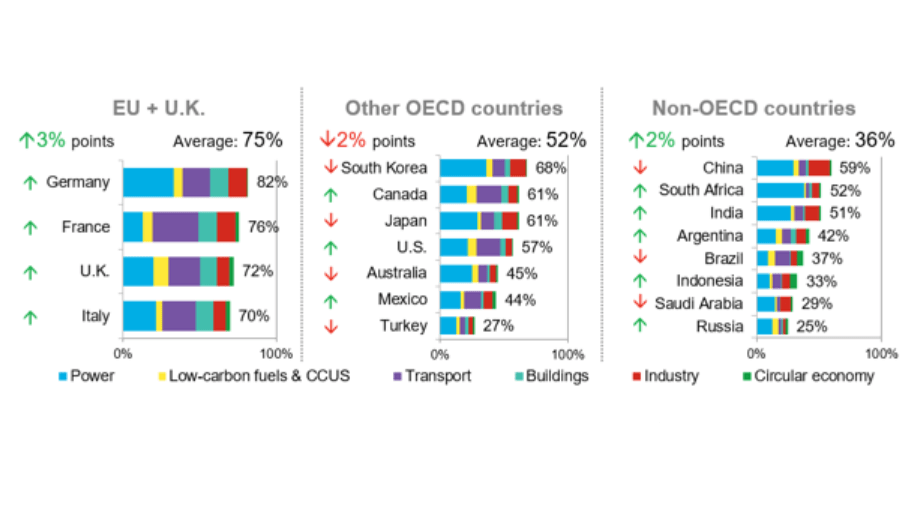 Fig 1: G20 BNEF Policy Scoreboard results, 2022
Source: BloombergNEF.
Note: Each country’s total score is weighted by each sector’s share of national GHG emissions